How to remove household odours: find the source first
Track household smells room by room, choose a suitable cleaner, and recognise when an odour needs appliance, plumbing or moisture investigation.
How do you find the source of a household odour?
Start with the place and timing of the smell, then check accessible sources one at a time.
“The house smells” is a difficult problem to solve. “The smell is strongest under the kitchen sink after washing up” gives you a useful starting point. Write down the room, when the smell appears and whether there is a visible spill, damp item or appliance nearby. Avoid repeatedly sniffing a suspected chemical or hazardous source.
Check ordinary accessible sources first: waste waiting to go out, a food container, damp laundry, a washable bin or a known pet accident. Keep a short list of what you remove and what changes. Do not cover the area with fragrance before inspecting it; you want to know whether the original smell actually resolves.
Which smells mean you should stop?
For suspected gas, leave and contact the gas utility or emergency services from a safe location. Follow Enbridge Gas emergency guidance; do not stay inside to investigate or operate switches. Burning or electrical smells also call for appropriate urgent help. A cleaning guide cannot identify the safety of the air from its smell.
For non-urgent odours, the EPA places source control at the centre of indoor-air improvement. That means dealing with what is producing the odour, while using ventilation when appropriate. An open window does not remove a spill or repair a leak.
What should you check in each room?
Use the room to narrow the search, then distinguish washable residue from an appliance or building problem.
Kitchen: bins, spills and food storage
Empty accessible waste and check whether a bag leaked into the bin. Look at the lid, rim and the floor beneath a movable household bin. Check accessible cupboard surfaces for visible spills without dismantling fittings or moving connected appliances. Keep food and clean utensils away from the work area.
In the fridge, identify and remove spoiled or leaking food. Follow the appliance’s procedure for temporarily storing food safely while you clean selected parts. Whirlpool describes mild detergent and warm water on suitable interior surfaces, followed by rinsing and drying. Clean containers before returning them and store food covered. See Whirlpool’s refrigerator-odour guidance for the appliance-specific approach.
Laundry: the fabric, the washer or the drain?
Compare the timing: does the smell come from a damp hamper, an empty washer or the area around drainage during a cycle? Separate those observations. Wash and dry washable fabrics according to their labels. For the machine itself, use our drum, drawer and seal checklist. A drainage symptom needs appliance or plumbing troubleshooting.
Bathroom: damp items and recurring moisture
Check mats, towels and accessible surfaces. Identify any item that remains wet between uses. Record a musty area that keeps returning or a patch that dries much more slowly than its surroundings. Our shower guide explains the mould and moisture boundary. Avoid pouring different chemicals into a drain to diagnose a sewage smell.
Living areas: a known spill or pet accident
Identify the affected item and its care label before adding liquid. A removable washable cover, a wool rug, leather upholstery and a wooden floor are different treatment decisions. Note what has already been applied. For an expensive, delicate or unidentified material, contact its maker or a specialist before treating a larger area.
Which products remove odours, and what are their risks?
Choose a product for the affected residue and material, not simply one labelled as an odour eliminator.
Swipe or scroll to see all columns →
| Option | Useful role | What to check |
|---|---|---|
| A compatible mild, unscented detergent | Cleaning specified washable bins, containers or appliance parts. | Follow dilution and rinsing instructions; protect food and food-contact items. |
| Laundry detergent matched to the care label | Washable towels, covers and other fabrics. | Confirm temperature, dose and drying instructions for that fabric. |
| Nature’s Miracle Urine Destroyer for Dogs | One manufacturer example of a targeted enzymatic pet-urine cleaner. | The listed product excludes untreated hardwood, leather, suede, silk and wool specialty fabrics. Check your exact pack. |
| Fragrance or air freshener | Adding a scent. | Do not treat a changed scent as evidence that a spill, leak or other source was removed. |
Are enzyme cleaners harmless because they are pet products?
No blanket conclusion follows from the product category. The Urine Destroyer label guidance warns about swallowing and eye irritation, and says prolonged skin contact may irritate skin. Its restrictions apply even though it is marketed for pet messes. Match the exact formulation, surface and application instructions; do not infer that another bottle with the same brand has identical directions.
Ask two separate questions before buying: “Will this suit my material?” and “What exposure precautions does this product require?” A product could be compatible with a carpet but still require careful handling. Product examples here illustrate that decision; they are not a claim about Heron’s cleaning supplies.
Keep cleaners separate, ventilate as directed and follow label protection and first-aid instructions. Health Canada provides household chemical guidance. If someone is exposed and may be harmed, seek poison-centre or medical advice with the container available.
How do you clean the source and check whether it worked?
Treat one identified area, complete the material’s full cleaning and drying process, then reassess it.
- Record the starting point. Note the affected material, visible residue and previous products. Photograph damage or a stain if it helps explain the condition.
- Remove the accessible source. Dispose of ordinary waste appropriately or separate a washable item. Do not disturb suspicious contamination, damaged building materials or a leaking appliance.
- Confirm the treatment. Read both the item-care instructions and cleaner label. Test only where permitted and follow the stated observation period.
- Use the complete method. Apply the allowed amount, follow its contact time, and rinse, blot or wipe as specified. Do not automatically rinse a product that is meant to work differently.
- Complete drying. Use the material’s permitted drying method. Avoid putting damp items back into a closed cupboard or placing a wet cover over furniture.
- Reassess the same location. Note whether the original smell resolved or returned and when. A perfume smell immediately after treatment is not a useful completion check.
This is a decision sequence, not a universal liquid recipe. A treatment that involves saturating an approved textile must never be transferred to an unknown wooden floor. Stop if the material changes colour, softens or appears damaged, and contact the relevant manufacturer.
Will ventilation, a humidifier or an ozone machine help?
Ventilation can support source control; adding moisture or generating ozone is not a substitute for cleaning the source.
Use outdoor air when conditions are suitable and the home’s extraction systems as intended. Consider outdoor smoke, pollution and humidity before opening windows. The aim is appropriate air exchange alongside correction of the source, rather than repeatedly airing out a problem that has not been identified.
A humidifier adds moisture
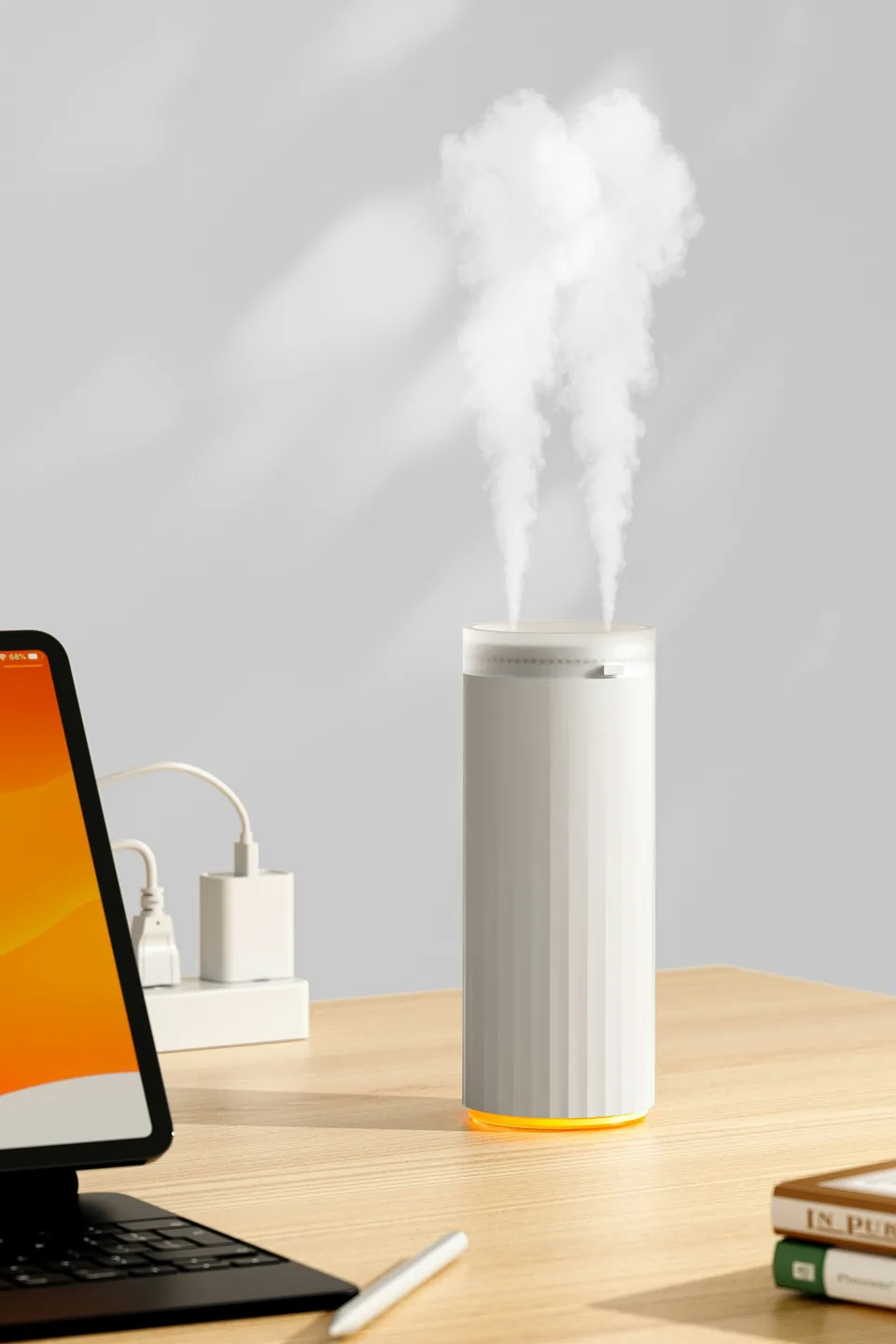
The hero photograph shows a humidifier. It is not an odour-removal device. The EPA’s humidifier guidance warns that excess moisture can encourage biological growth and that poorly maintained units can disperse contaminants. Use humidity control according to actual conditions and maintain the unit as instructed; do not add fragrance or cleaning chemicals to its tank unless the manufacturer specifically permits them.
Avoid ozone as a household deodorising shortcut
The EPA explains that ozone can harm the lungs and is ineffective against many indoor pollutants at concentrations within health standards. An ozone generator is not our recommendation for ordinary occupied-home odour treatment.
What if the smell returns after thorough cleaning?
Use the recurrence as information about an unresolved source or material, rather than a reason to keep adding products.
Consider what ordinary cleaning could actually reach. Did a spill enter a seam or cushion? Does the smell appear only when an appliance drains? Is there an ongoing damp patch? Record the location and timing after the area has dried. These observations help a technician or specialist decide what to inspect.
- Appliance symptoms: share the model, error codes, drainage behaviour and completed cleaning steps with service.
- Plumbing symptoms: describe the fixture, when the smell appears and any leak or drainage change.
- Building moisture: document recurring dampness or visible growth and arrange assessment.
- Delicate or penetrated materials: ask a qualified textile, flooring or restoration specialist about treatment options.
For a home-cleaning booking, describe the accessible work you want done. A focused kitchen or bathroom task may be more relevant than a whole-home reset. If several rooms need ordinary buildup removed, compare Deep and regular cleaning with the source of the odour kept explicit.
How can Heron help with the surrounding home cleaning?
Confirm the rooms, reachable surfaces and selected tasks before booking.
Tell Heron where the smell is strongest, when it appears and which reachable surfaces need cleaning. Fridge-interior cleaning is a separate selection. Discuss the condition before booking; a household clean does not promise removal of every odour or include plumbing, mould remediation or upholstery extraction.
For routine kitchen and bathroom surfaces, see house cleaning in Oakville or house cleaning in Mississauga. For a home needing more detailed attention, discuss Deep cleaning in Brampton or Deep cleaning in Hamilton. Explain the source of the smell and any damage before choosing a cleaning scope.
Check all service areas and nearby communities to find your address’s coverage.
Household odour cleaning questions
What is the best product for tough household odours?
There is no single choice for every source. Identify the residue and material first: washable food spills, laundry and a pet accident call for different products and methods.
Can an enzyme cleaner be harmful?
Yes, depending on the product and exposure. Read its warnings and surface exclusions. A pet-urine cleaner is not automatically harmless to swallow, breathe or touch, or suitable for every fabric.
Will a humidifier remove a bad smell?
No. It adds moisture. Identify the odour source and check whether excess dampness is already part of the problem before using a humidifier.
Does fragrance prove a room is clean?
No. Evaluate the original source and the condition after cleaning and drying. Added fragrance can change what you smell without correcting the cause.
Should I pour bleach down a smelly drain?
Do not use drain chemicals to diagnose an uncertain smell or combine them with products already present. Persistent sewage or drainage symptoms need appropriate plumbing advice.
Why does the same smell return after a day?
The source may remain, be continuing, or have reached material that surface cleaning could not address. Record where and when it returns and seek the relevant assessment.
Can Heron clean a fridge interior that smells?
Fridge-interior cleaning is separately selected. Describe its condition and prepare it as agreed. Persistent appliance problems or inaccessible contamination need separate assessment.
Does every odour mean I need a Deep clean?
No. Start with the source. A particular washable surface may need focused attention, while a leak, appliance fault or damaged material needs different help.
Which care guide should you read next?
Use the method for the actual material or appliance you are cleaning.
Where can I book help with these cleaning tasks?
Find cleaning help for the tasks covered here. For preparation and booking details, see Heart Lake cleaning in Brampton or Stinson cleaning in Hamilton. Each guide explains local access planning and how to choose the requested rooms and extras.
Sources
Care guidance checked October 19, 2026. Use the instructions for your exact material, appliance and product.
Heron’s rate card 2026-11-11 defines selected household tasks.